Can Neurofeedback Have Side Effects? What to Know Before You Start
Read Time:
13.9 minutes
Categories:
Share This:

If you’ve been looking into neurofeedback, you may have wondered:
“Can neurofeedback have side effects?”
Maybe you’ve searched for side effects of neurofeedback because you’re considering it for yourself. Maybe you’re a parent researching it for your child. Or maybe you’ve heard that neurofeedback is gentle and non-invasive, but you still want to understand what someone might feel during or after a session.
That is a fair question.
And it deserves an honest answer.
At Grey Matters Brain Training Studio, we do not want to dismiss the question by simply saying, “There are no side effects.” We also do not want to make neurofeedback sound frightening or dramatic when it is not.
So let’s talk about it clearly.
Neurofeedback is non-invasive. Nothing is going into your brain. There is no electrical stimulation. There is no shock. The sensors are simply reading the electrical activity your brain is already producing and giving your brain feedback in real time.
For most people, neurofeedback is well tolerated. Many clients describe sessions as calm, relaxing, or even easy.
But some people may notice temporary changes after a session, such as fatigue, headache, dizziness, sleep changes, emotional sensitivity, or just feeling a little “off.”
That does not automatically mean something is wrong, and it does not always mean neurofeedback caused it. It may be your brain or nervous system responding to training, or it may be related to sleep, hydration, stress, blood sugar, medication changes, migraines, or another health factor. Either way, your provider should know.
Here’s what you should know before you start.
First, What Is Neurofeedback?
Neurofeedback is a type of biofeedback that focuses on the brain.
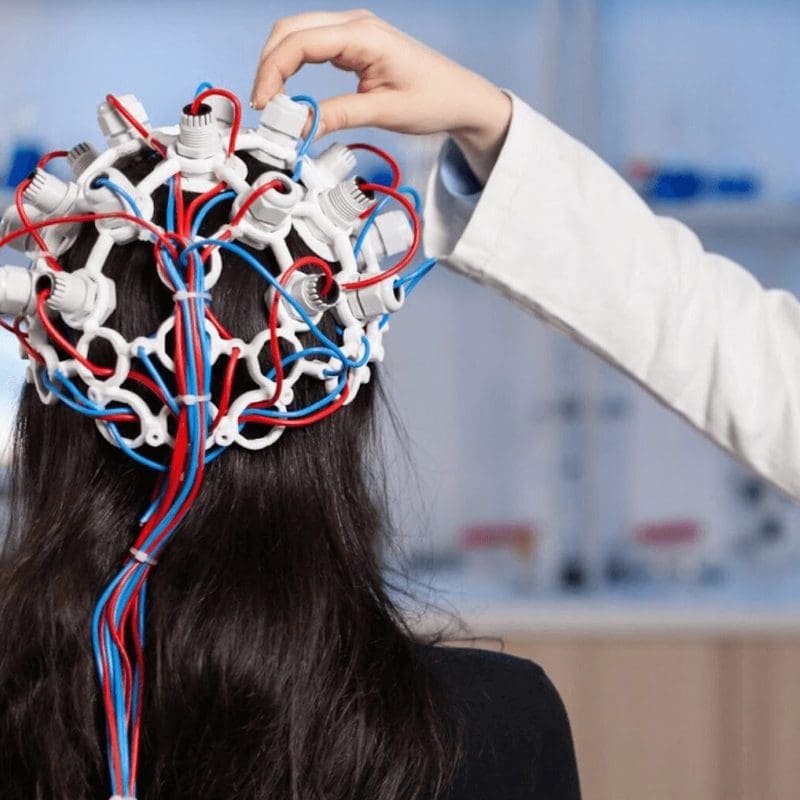
During a neurofeedback session, sensors are placed on the scalp to monitor brainwave activity. These sensors do not send anything into the brain. They only listen.
As your brain produces different patterns of activity, the software gives feedback through sound, video, or another visual cue. When your brain moves toward a more regulated pattern, it receives a reward. When it moves away from that pattern, the feedback changes.
Your brain uses that information to learn.
You do not have to force anything. You do not have to concentrate perfectly. You do not have to “perform” the session correctly.
In many ways, neurofeedback is a learning process. The brain is being shown information about itself, and over time, that feedback may help support better self-regulation.
At Grey Matters, we do not begin with guesswork. We start with a qEEG brain map so we can better understand what your specific brain is doing before we create a training plan.
We do not believe your brain should be trained from a template. We want to understand your starting point first.
So, Are There Side Effects of Neurofeedback?
The phrase “side effects” can be a little misleading.
When people hear side effects, they often think of medication — something entering the body and causing a reaction.
That is not how neurofeedback works.
Neurofeedback does not involve medication, surgery, or stimulation. Nothing is being added to your brain or body. It is a feedback-based training process.
However, because the brain is being asked to learn, adjust, and practice new patterns, some people may notice temporary effects during or after training.
A better way to think about them may be “temporary responses” or “after-session effects.”
Still, people are asking about common side effects of neurofeedback, so we want to answer the question directly.
Yes, some people may experience temporary effects after neurofeedback. These are usually mild and short-lived, and they are also useful information for your provider.
If something feels uncomfortable, unusual, or too intense, tell us.
That feedback helps us adjust the training to better match your brain.
Common Side Effects of Neurofeedback
Everyone’s brain is different, so everyone’s response to training can be different.
Some clients feel relaxed after a session. Some feel more focused. Some feel tired. Some do not notice much right away.
Some temporary effects people may report include the following.
Fatigue After Neurofeedback
Fatigue is one of the more common things people may notice after neurofeedback.
This makes sense.
Your brain uses a tremendous amount of energy every day. During training, it is being asked to pay attention to feedback and practice self-regulation. Even though the session may feel passive, the brain is still working.
Some people describe this as mental tiredness rather than physical exhaustion.
It may feel like:
- Wanting to rest after a session
- Feeling mentally slower for a short time
- Needing a quieter evening
- Feeling like your brain “worked out”
This usually passes. Many people feel better after rest, hydration, food, or a good night of sleep.
If fatigue feels heavy, lasts longer than expected, or interferes with your day, it is worth telling your provider. Your training frequency, session length, or protocol may need to be adjusted.
Headache or Pressure
Some people may notice a mild headache or pressure during or after neurofeedback.
A mild headache does not automatically mean neurofeedback is unsafe. It may mean the session was too activating, you were already tired, or your nervous system needs a gentler approach. It could also be related to hydration, sleep, stress, migraines, or another factor.
But we do not want you to push through discomfort.
If you notice mild headache or fatigue after neurofeedback, speak up. Even small changes matter.
At Grey Matters, we want to know what you are feeling during and after your sessions. Your experience gives us important information about how your brain is responding.
Dizziness or Vertigo-Like Feelings
Dizziness or vertigo-like sensations are less common, but they can happen for some people.
This may feel like:
- Lightheadedness
- Feeling unsteady
- Feeling spacey
- A brief sense of imbalance
- Feeling “off” after the session
If dizziness is sudden, severe, persistent, or accompanied by other symptoms, seek medical guidance promptly.
Dizziness and vertigo can have many causes, and not all of them are related to neurofeedback. Hydration, blood sugar, sleep, stress, inner ear concerns, migraines, medication changes, and other medical factors may all play a role.
That is why communication matters.
If you have a history of vertigo, migraines, seizures, concussion, fainting, or other neurological concerns, it is important to share that before you begin training. And if symptoms feel concerning, intense, or persistent, you should talk with your healthcare provider.
Sleep Changes After Neurofeedback
Because neurofeedback works with brain regulation, some people notice changes in sleep.
For some, that may be a welcome change. They may fall asleep more easily or sleep more deeply.
For others, there may be a temporary disruption. They may feel more alert at night, have vivid dreams, wake up more often, or feel like their sleep rhythm is shifting.
This does not mean the training is “bad.” It may mean the brain is adjusting.
But sleep is important. It is also one of the clearest windows into how your nervous system is responding.
If your sleep changes after neurofeedback, tell your provider. The timing of your sessions, the protocol being used, or the pace of training may need to be adjusted.
Emotional Sensitivity or Feeling “Off”
Sometimes people notice emotional changes after a session.
This may look like:
- Feeling more sensitive than usual
- Feeling teary
- Feeling irritable
- Feeling unusually calm
- Feeling unsettled without knowing why
- Feeling like old emotions are closer to the surface
The brain and nervous system are deeply connected to emotional regulation. So when the brain is training, emotional shifts can sometimes show up.
That does not mean neurofeedback is doing something wrong.
But it does mean your provider should know.
If emotional changes feel intense, frightening, unsafe, or include thoughts of harming yourself or someone else, seek immediate professional or crisis support.
At Grey Matters, we do not want to ignore these experiences. We want to understand them. The goal is not to force your brain through a protocol. The goal is to support your brain with the right information, at the right pace, in the right way.
Biofeedback Side Effects: How Is This Different?
Biofeedback is a broader category of training that helps people become more aware of body functions such as heart rate, breathing, muscle tension, skin temperature, or brainwave activity.
Neurofeedback is specifically brain-based biofeedback.
Because biofeedback is generally non-invasive, it is often considered low risk. Cleveland Clinic describes biofeedback as using noninvasive monitoring equipment to measure functions such as breathing, heart rate, muscle tension, and electrical brain activity; it also identifies EEG biofeedback as neurofeedback. Mayo Clinic notes that biofeedback is generally safe, but may not be right for everyone, especially people with certain medical concerns, so speaking with a healthcare provider is recommended.
That is the balanced message we want clients to hear.
Biofeedback and neurofeedback are not invasive treatments. But that does not mean every person’s experience is identical. Your health history, nervous system, sleep, stress level, medications, and neurological background all matter.
Why We Start With a Brain Map
One of the most important ways to reduce unnecessary discomfort is to avoid guessing.
That is why Grey Matters starts with a qEEG brain map.
A brain map gives us objective information about your brain’s electrical activity before training begins.
It gives us information about patterns that may suggest overactivity, underactivity, connectivity differences, or regulation challenges.
Without that information, neurofeedback can become more generalized.
And generalized is not the same as personalized.
Two people can have the same symptoms and very different brain patterns. Two children can both struggle with attention and need different kinds of support. Two adults can both feel anxious, but one brain may be overactivated while another may be exhausted and under-regulated.
The brain map helps us ask a better question:
Not “What protocol usually goes with this symptom?”
But:
“What is this brain actually doing?”
That is where more personalized, thoughtful training begins.
When Should You Tell Your Provider?
Tell your provider anytime something feels uncomfortable, unusual, or different enough that you notice it.
That includes:
- Headache
- Fatigue
- Dizziness or vertigo-like feelings
- Sleep changes
- Emotional sensitivity
- Feeling overly activated
- Feeling unusually tired
- Feeling spacey or disconnected
- Any symptom that concerns you
You are not bothering us by sharing these details.
You are helping us do better work.
Neurofeedback should be responsive. Your provider should be listening to both the data and your lived experience.
If something does not feel right, we want to know.
When Should You Talk With a Healthcare Provider?
Neurofeedback is not a replacement for medical care.
If you have medical concerns, a neurological condition, a history of seizures, significant vertigo, fainting, recent concussion, medication changes, or symptoms that feel severe or persistent, talk with your healthcare provider.
This is especially important if symptoms are new, intense, or not clearly connected to the timing of neurofeedback.
At Grey Matters, we care about staying within the right scope. A brain map can give us useful functional information, but it is not a medical diagnosis. Neurofeedback can be a supportive tool for brain regulation, but it does not replace the guidance of your physician, neurologist, therapist, or other healthcare professional.
The goal is not either/or.
The goal is the right support for the whole person.
How to Support Your Brain During Neurofeedback
There are a few simple things that can help your brain respond well to training.
First, be honest about how you feel. Do not try to be the “easy” client. If you feel tired, dizzy, emotional, wired, or off, say so.
Second, give your brain rest. Neurofeedback is not something that should be rushed. More is not always better. Your brain needs time to integrate what it is learning.
Third, pay attention to sleep. Sleep is when the brain does a tremendous amount of repair, processing, and consolidation. If your sleep changes, we want to know.
Fourth, eat and hydrate before sessions. A hungry, dehydrated, overstressed brain is not always the most flexible brain.
Finally, choose a provider who is willing to personalize your training. The quality of the process matters.
Here’s How You Can Help Minimize Side Effects
While neurofeedback is non-invasive, we are working with your brain, which means we need to be aware of any neurological conditions you have to minimize any side effects and optimize your individual results. These conditions include things like epilepsy, narcolepsy, migraines, Parkinson’s, multiple sclerosis, ADHD, autism, PTSD, etc. If you’ve had a concussion or other brain injury, the qEEG brain map will detect abnormalities in your brain waves, but it’s best to inform us and give us the details of that or any other condition. We want to know all we can to customize the training to help your unique brain reach its highest potential. This is also a safety precaution so we can adjust your training protocol and frequency.
Here are some things you can do to minimize side effects of neurofeedback training:
- Always work with a qualified professional. Even if you choose not to work with our clinic, you should undoubtedly choose a professional that knows what they’re doing. A trained practitioner understands the brain’s frequencies and how to make the appropriate adjustments for your best outcome.
- Do not overwork your brain. Many people ask us if they can come in every day of the week. While we would love to agree, this just isn’t practical and could limit your brain’s progress. Just like your muscles, your brain can only handle so much change and information at one time. Spacing out your training sessions gives your brain enough time to rest and use the new pathways created. Also, on the days you train, if at all possible, it’s best to avoid other mentally taxing activities for long periods of time.
- Eat healthy foods. Your diet has a huge influence on the operation of your brain all of the time, and especially when undergoing neurofeedback training. You will want to support your brain by giving it the nutrition and energy it needs to make beneficial changes. Eating a diet that includes healthy fats, lots of protein, leafy greens, vegetables and berries, and whole grains is a good idea for most people and should minimize the side effects, including fatigue.
- Get lots of quality sleep. During sleep your brain processes information, consolidates memories, makes connections, and clears toxins. Your brain makes permanent what was learned in that day’s training session during that night’s sleep. So, it’s imperative that you get seven to nine hours of sleep while training.
The Bottom Line
So, can neurofeedback have side effects?
Some people may experience temporary effects such as fatigue, mild headache, dizziness, sleep changes, emotional sensitivity, or feeling off after a session.
But neurofeedback itself is non-invasive. Nothing is being put into your brain. The sensors are only reading your brain’s activity and giving it feedback.
That distinction matters.
We do not want to make neurofeedback sound scary. We also do not want to dismiss real questions people are asking.
The honest answer is this:
Neurofeedback is generally well tolerated, but your brain’s response matters. If something feels uncomfortable, tell us. If you have medical concerns, talk with your healthcare provider. And if you are considering neurofeedback, choose a provider who starts by understanding your brain rather than guessing.
At Grey Matters Brain Training Studio, that is why we begin with a brain map.
Because your brain is not generic.
Your training should not be either.
Ready to Understand Your Brain?
If you are curious about neurofeedback but want to start with clarity, the first step is a brain map.
We will look at your brain’s electrical activity, walk you through what we see in plain language, and help you understand whether neurofeedback is the right next step.
When your brain is better understood, your path forward becomes clearer.
See the Benefits of Neurofeedback in Your Own Life
At Grey Matters Brain Training Studio, we want you to help you be your best self and live your best life. Neurofeedback training can help you get there by guiding your brain to optimal performance.
When your brain works better, your life works better.
Neurofeedback has scientifically documented benefits for both brain and body. It also helps mitigate the symptoms of anxiety, depression, PTSD, migraines, ADD/ADHD, autism, apraxia, concussion, brain injury, IBS and leaky gut, and much more. Please contact us or give us a call at (317) 215-7208 today to learn how we can improve your brain and life.
First image: Image by DCStudio on Freepik
Second image : Image by dooder on Freepik
Frequently Asked Questions
About Side Effects of Neurofeedback
Some of the temporary effects people may report after neurofeedback include fatigue, mild headache, dizziness, sleep changes, emotional sensitivity, or feeling a little off after a session. These effects are usually short-lived, but they should always be shared with your provider.
Some people may experience mild headache or fatigue after neurofeedback. This may happen as the brain responds to training, but headache and fatigue can also have other causes, including sleep, hydration, stress, blood sugar, migraines, or medication changes.
Neurofeedback is a type of biofeedback focused on brain activity. Biofeedback is generally non-invasive, but people can respond differently depending on their health history and the type of training. With neurofeedback, temporary effects may include fatigue, headache, dizziness, sleep changes, or emotional sensitivity.
Neurofeedback is non-invasive and generally well tolerated. Sensors read the brain’s activity; they do not send electricity into the brain. However, anyone with medical concerns, neurological conditions, seizures, significant vertigo, recent concussion, or medication changes should talk with their healthcare provider before beginning.
Do not ignore discomfort. If you feel tired, dizzy, emotional, wired, or off after a session, tell your provider. Sometimes the protocol, session length, or training frequency can be adjusted. For severe or persistent symptoms, contact your healthcare provider.
Some people may notice dizziness or vertigo-like feelings, although this is less common. If you experience dizziness, especially if it is intense, persistent, or unusual for you, tell your neurofeedback provider and speak with your healthcare provider.