
See it in action
See it in action
How Neurofeedback Works
Here at Grey Matters Brain Training Studio, our goal is to improve your life through brain training. Whether you’re here for sleep, stress, focus, or brain injuries, we can help!
How Neurofeedback Can Help
Neurofeedback is an effective, non-invasive therapy that has been proven to help with various mental health conditions, including:
Improving Sleep
Sleep is critical for overall health and well-being, yet many struggle with sleep disorders such as insomnia. Neurofeedback trains the brain to achieve healthier sleep patterns by helping regulate brainwave activity associated with restful sleep, resulting in deeper, more restorative sleep and reduced insomnia symptoms.
Managing Depressive Symptoms
By promoting optimal brain function and balancing neurotransmitter activity, neurofeedback helps alleviate depressive symptoms, allowing individuals to experience improved mood, emotional regulation, and overall mental resilience.
Releasing Anxiety
Neurofeedback assists in calming the overactive brain regions associated with anxiety, fostering a sense of relaxation and empowering individuals to manage their anxious thoughts and feelings more effectively.
Improving Focus
Through targeted training, neurofeedback enhances concentration and attention by teaching the brain to maintain optimal states of alertness, leading to improved productivity and performance in daily tasks.
Enhancing Memory
Neurofeedback can strengthen neural pathways related to memory and learning, supporting cognitive function and making it easier to retain and recall information, which is especially beneficial for students and professionals alike.
Brain Injury Recovery
Neurofeedback aids in the rehabilitation of brain injuries by promoting neuroplasticity, facilitating recovery, and helping individuals regain cognitive and functional abilities through personalized brain training techniques.


How Neurofeedback Works
Neurofeedback is a cutting-edge, non-invasive therapeutic technique that empowers individuals to regulate their brain activity and enhance their mental well-being. Here’s a simple breakdown of how it works:
Understanding Brainwaves
Our brains generate electrical impulses that create brainwaves, which are categorized into different frequency bands, including delta, theta, alpha, beta, and gamma. Each of these waves plays a unique role in how we think, feel, and behave. For instance, alpha waves are associated with relaxation, while beta waves are linked to active thinking and problem-solving.
qEEG Brain Mapping
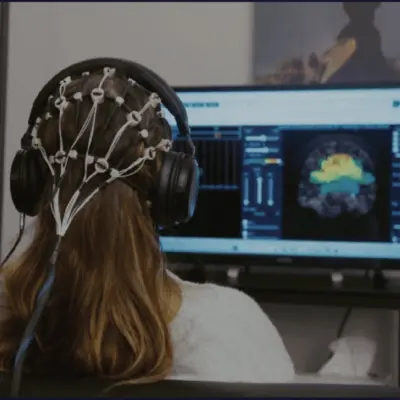
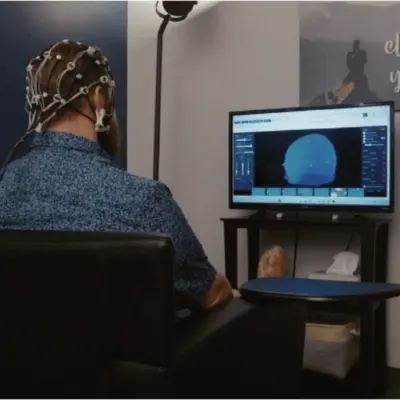
The process begins with a qEEG (quantitative electroencephalogram) brain map. During this step, sensors are placed on your scalp to measure your brain’s electrical activity. This assessment provides a visual representation of your brainwaves and helps identify areas that may require support or improvement.
Real-Time Feedback
Using the data collected from the qEEG, our advanced neurofeedback technology provides real-time feedback during training sessions. As your brain generates different types of activity, you’ll hear varying sounds—like music or tones—that provide immediate feedback on how well your brain is functioning.
Learning to Self-Regulate
As you interact with the feedback, your brain learns to recognize and adjust its activity. When your brain is operating within the desired range, you’ll hear pleasant sounds or music that encourages your brain to maintain that state. If your brain strays from this optimal activity, the sounds will change, guiding you back to a more balanced state. Over time, this process teaches your brain how to maintain a more balanced state without relying on external feedback.
Long-Lasting Benefits
With consistent neurofeedback training, your brain develops new pathways and connections, promoting healthier functioning. Many individuals experience significant improvements in areas such as attention, focus, emotional regulation, sleep quality, and overall mental health. Neurofeedback empowers you to unlock your brain’s potential and cultivate a more fulfilling life.
Start Your Journey Today
The Neurofeedback Journey
STEP 1: Brain Health Assessment with qEEG Brain Map
Your journey begins with a Brain Health Assessment. Using a non-invasive, pain-free qEEG Brain Map, we measure your brain’s electrical activity to see how it may be contributing to your symptoms.
Choose the Assessment That Fits Your Needs
We offer two comprehensive starting points to help uncover what may be contributing to your symptoms and guide your next steps with clarity and confidence.
- Comprehensive Brain Assessment – $597
Includes a qEEG Brain Map, written report, and full consultation with our clinician to review your results, connect findings to your symptoms, and discuss your health history, goals, and personalized training recommendations. - Comprehensive Brain + Gut Assessment – $997
Includes everything in the Comprehensive Brain Assessment, plus an at-home GI-MAP Stool Test to explore how gut health, inflammation, bacteria, and other underlying imbalances may be contributing to mental health symptoms. This option offers a more complete view of the brain-body connection and helps guide a more personalized care plan.
STEP 2: Brain Training Sessions
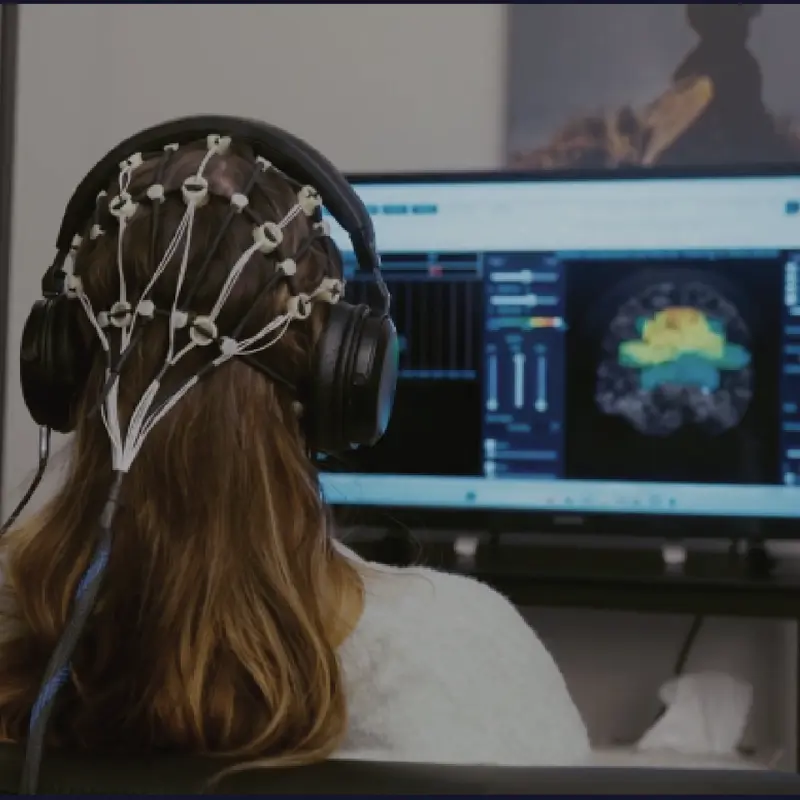
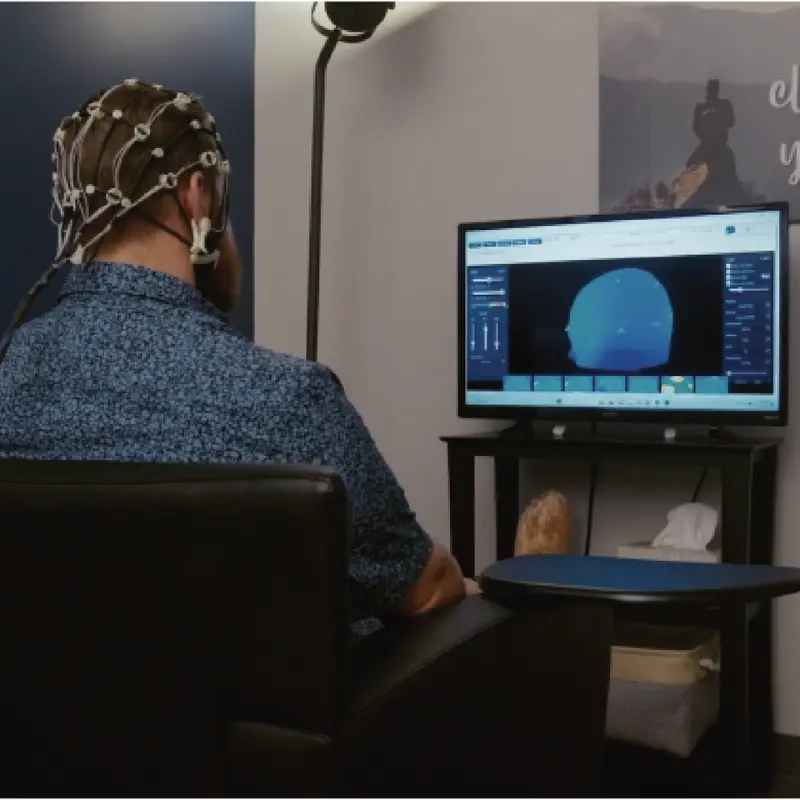
Once we’ve identified your unique brain patterns, training begins. You’ll relax in a comfortable chair while wearing a soft saline sensor cap. The software reads your brain wave activity and provides gentle rewards (sounds through headphones or visuals on a screen) as your brain learns healthier patterns.
-
Adults often enjoy reading, journaling, or simply relaxing during sessions.
-
Younger clients may choose to color, watch educational shows, or even do homework.
Each session is safe, calming, and designed to help your brain shift into balance.
STEP 3: Graduation & Maintenance
When your goals are achieved, it’s time to celebrate your Graduation! Clients often report improvements in focus, mood, sleep, and overall well-being.
To maintain these gains long-term, we recommend monthly maintenance sessions. These tune-ups help reinforce your brain’s progress and protect the investment you and your brain have made.

Consistency is key with brain training.
Just like we need to be consistent in the gym, we need to be consistent with brain training for quicker results. A minimum of twice weekly is recommended. The length of your program will be discussed during your results review and is based on your unique situation.
You have questions, we have answers!
You have questions, we have answers!
We’ve gathered a list of commonly asked questions for your convenience. If you don’t see the information you need, please don’t hesitate to reach out to us. Simply click on the question that interests you to navigate directly to the relevant section.
Yes, at Grey Matters, a Brain Map is the first step. It helps identify how your brain is functioning so your neurofeedback training can be personalized. Starting without this step can lead to a more generalized approach that may not address your specific needs.
Your first appointment typically includes a Brain Map, where your brain activity is recorded using non-invasive sensors. Afterward, your results are reviewed, and a personalized training plan is created before beginning neurofeedback sessions.
Yes, brain mapping is completely safe and non-invasive. The sensors only read your brain’s activity—they don’t send anything into your brain. Most people find the process comfortable and easy.
Neurofeedback is a passive experience. You may watch a screen or listen to sounds while your brain receives feedback. There’s no pain or effort required, and many people find sessions relaxing.
The number of sessions varies depending on your goals and your brain’s patterns. Some people notice early improvements, while others experience more gradual changes over time. Consistency and a personalized plan are key.
Neurofeedback is commonly used to support focus, emotional regulation, stress, and sleep. A Brain Map helps determine whether this approach is a good fit for your specific concerns.
Preparation is minimal. You may be asked to avoid caffeine or certain medications beforehand, depending on your provider’s guidance. Otherwise, you can come as you are.
After your Brain Map, your results are reviewed with you in clear, simple terms. Based on those findings, a personalized neurofeedback training plan is created to support your goals.
Let’s start by clarifying what neurofeedback is NOT. Neurofeedback is NOT electrical stimulation and does not shock the brain. In fact, it’s completely noninvasive and pain-free. Nothing ever goes to or in your brain.
Neurofeedback is a form of biofeedback that uses the electrical activity of the brain to reinforce optimal brain wave patterns through operant conditioning, thus improving one’s life.
Neurofeedback is a superior solution because it doesn’t just ease the symptoms. It addresses and changes what is causing the symptoms or problems at the source in your brain. Your brain learns how to function differently in a way that relieves problematic symptoms or behaviors.
Neurofeedback training has many scientifically documented benefits both for the brain and body, including stress reduction, improved sleep, better focus and memory, heightened mental clarity, more emotional and behavioral regulation, enhanced cognitive performance, and more. Give it a try today, we bet your brain is capable of the changes you desire!
Yes.
Some clients are able to decrease their medication over time with their prescriber. Grey Matters does not make any medication adjustments.
In a neurofeedback session, qEEG sensors are placed on your scalp, recording your brainwaves and sending the information to a computer in real-time. The computer, through auditory or sound feedback, teaches your brain to perform at optimal levels by a method called operant conditioning, which harnesses your brain’s reward system.
All learning is at a subconscious level. You don’t actually have to “do” anything. With consistent repetition through auditory feedback, the brain learns to self-regulate and makes physiological changes to perform more optimally and will continue to make the adjustments after the initial training. Because it’s a learning process, the results of neurofeedback occur gradually over time.
During a 35 to 45-minute session, you sit comfortably in a chair. You can have a footstool, blanket, and eye mask for relaxation. You are given headphones to listen to the training sounds and can either watch scenic images, read, journal, or kick back and relax. For the younger ones, they can color, draw, read, do homework, or play with Legos.
Consistency is key. The brain requires a minimum of 2 sessions per week to learn and retain new patterns. An average of 35 sessions is needed for the brain to make permanent neuroplastic changes. Remember, your brain is learning, and learning takes time and repetition. If you have multiple diagnoses or are on psychological medications, more sessions may be required for your desired results.
There are no long-term negative effects.
Just like taking your temperature with a thermometer does not deliver anything to your body, a qEEG brain map or a qEEG-guided training session does not deliver anything to your brain – it only reads your brain’s electrical activity. The auditory feedback you hear encourages your brain to “exercise.” So, similar to the variety of feelings after a good workout at the gym, some people experience symptoms such as being more tired or more wired, and few will develop a slight headache after a session. These symptoms go away within hours and are not long-lasting.
Our Brain Coaches are here to assess your training progress, discuss any symptoms you may experience, and provide educated feedback to you during your journey.
Sleep hygiene, a healthy diet, reduced screen time, exercise, and stress management, among many other factors, help you improve not only your brain but also your overall well-being.
Grey Matters Brain Training Studio offers simple training packages. Choose from a set number of sessions or our most popular plan, Grey’s Plan 4-Month Unlimited Membership which costs $5,997. Family packages are also available.
To get started, come on in for a Brain Health Assessment, with a qEEG brain map designed to help you take the first step toward a healthier mind and improved quality of life. With our expert guidance and state-of-the-art neurofeedback technology, you can experience positive changes in your mental well-being.
We do not accept insurance; however, we offer a variety of payment options.
We accept:
- Cash, checks, all major credit cards, and Apple Pay
- Health Savings Account (HSA) and Flexible Spending Account (FSA) and HRA Health Reimbursement
- Financing options are available through First Financial Bank
- Advanced Care Credit
- Vagaro Pay Later
- Monthly Payment Plans
Think about the cost of therapy, medications, dissatisfaction with life, lost work hours, and the hope to feel better. It’s worth it. Come on in, we got you.
We use Brainmaster amplifiers and BrainAvatar software.
Some of the temporary effects people may report after neurofeedback include fatigue, mild headache, dizziness, sleep changes, emotional sensitivity, or feeling a little off after a session. These effects are usually short-lived, but they should always be shared with your provider.
Some people may experience mild headache or fatigue after neurofeedback. This may happen as the brain responds to training, but headache and fatigue can also have other causes, including sleep, hydration, stress, blood sugar, migraines, or medication changes.
Neurofeedback is a type of biofeedback focused on brain activity. Biofeedback is generally non-invasive, but people can respond differently depending on their health history and the type of training. With neurofeedback, temporary effects may include fatigue, headache, dizziness, sleep changes, or emotional sensitivity.
Neurofeedback is non-invasive and generally well tolerated. Sensors read the brain’s activity; they do not send electricity into the brain. However, anyone with medical concerns, neurological conditions, seizures, significant vertigo, recent concussion, or medication changes should talk with their healthcare provider before beginning.
Do not ignore discomfort. If you feel tired, dizzy, emotional, wired, or off after a session, tell your provider. Sometimes the protocol, session length, or training frequency can be adjusted. For severe or persistent symptoms, contact your healthcare provider.
Some people may notice dizziness or vertigo-like feelings, although this is less common. If you experience dizziness, especially if it is intense, persistent, or unusual for you, tell your neurofeedback provider and speak with your healthcare provider.