
ADHD Isn’t a Behavioral Disorder.
It’s a Brain Regulation Disorder.
If your child is struggling…or if you’re an adult who’s exhausted from trying to “hold it all together,” you’re not imagining it.
ADHD is NOT caused by:

What’s Really Happening in an
ADHD Brain?
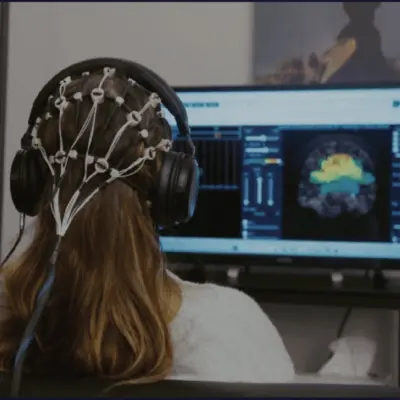
A qEEG Brain Map lets us SEE the electrical activity in the brain. Most ADHD brains show one or more of these patterns:
Excess Slow-Waves (Theta)
Insufficient Fast-Waves (Beta)
Excess Fast-Waves (High Beta)
Frontal Lobe Underactivation
Default Mode Network (DMN) Dysregulation





How Neurofeedback
Helps ADHD
Neurofeedback is a safe, drug-free, non-invasive way to help the brain learn healthier patterns.
During a session:
Over time, the brain learns how to self-regulate, resulting in:
This is long-term neurological change — not a band-aid.

Our 3-Phase ADHD
Neurofeedback Program
Your Brain Map determines exactly which protocols are used in each phase.
Every plan is individualized.
This is the foundation of your ADHD treatment — and it leads directly into our most complete option: Grey’s Plan.
Grey’s Plan — The Most Complete
ADHD Program We Offer
If you want the most comprehensive, all-inclusive, guided ADHD solution for your child or yourself, Grey’s Plan gives you everything needed to make the next 4 months the turning point.
Neurofeedback alone is powerful.
But when you combine brain training with gut testing, clinical oversight, and unlimited support, results come faster, smoother, and last longer.

What Results
Can You Expect?


Lifestyle Habits That Boost
ADHD Neurofeedback Results
Reduced screen time

Consistent sleep routine
Protein-rich meals
Less processed foods
Body Movement

Breathing techniques
Predictable routines
Gut support
Frequently Asked Questions
About ADHD
We’ve gathered a list of commonly asked questions about ADHD, for your convenience. If you don’t see the information you need, please don’t hesitate to reach out to us. Simply click on the question that interests you to navigate directly to the relevant section.
ADHD often shows up as difficulty focusing, forgetfulness, trouble completing tasks, disorganization, and feeling overwhelmed. Children and adults with ADHD experience emotional ups and downs, impulsivity, and difficulty managing time.
ADHD doesn’t suddenly appear in adulthood, but it is often recognized later in life. Many adults weren’t diagnosed as children, so symptoms become more noticeable as responsibilities increase.
Adult ADHD is linked to differences in how the brain regulates attention, impulse control, and motivation. Research shows that neurotransmitters like dopamine play a key role, along with brain network activity involved in focus and emotional regulation.
No. ADHD is not about willpower or laziness. It’s a neurological condition that affects how the brain manages focus, motivation, and regulation. Many adults with ADHD are trying very hard—but their brain is working differently.
Diagnosis typically involves a clinical evaluation, including symptom history and behavioral patterns. At Grey Matters, a qEEG Brain Map can provide additional insight into how the brain is functioning and help guide personalized support.
For many children and adults, neurofeedback for ADHD can be a helpful option. While no treatment works for everyone, many families and adults report improvements in focus, emotional regulation, follow-through, and mental overwhelm.
Yes. Neurofeedback can be helpful for both adults and children with ADHD. The goal is to support healthier brain patterns related to focus, attention, and emotional regulation. Adults often come in feeling mentally scattered or overwhelmed, while parents are usually looking for support with school, behavior, and daily functioning.
Medication and neurofeedback work differently. Medication helps manage symptoms while it is active in the body. Neurofeedback is designed to help the brain practice healthier patterns over time. Some people choose one approach, and others use both.
Many children and adults do well with about 20 to 40 sessions, depending on their needs and how they respond. Some families also choose occasional booster sessions later on.
Yes. Many families do both. We do not adjust medication, but neurofeedback can be done alongside medication and other supports.
Usually, yes. The training is passive. Your child sits comfortably, watches a movie, or listens to music while the brain receives feedback. It does not feel like schoolwork or therapy.
It can help support the brain functions that learning depends on, such as focus, attention, regulation, frustration tolerance, and follow-through. While it does not teach academic content, many parents notice that homework becomes easier and school feels less overwhelming.
There is encouraging research and a great deal of clinical experience behind neurofeedback for ADHD. Like many treatment options, results can vary from person to person, but it continues to be explored and used as a supportive option for children and adults with ADHD.
Most clients say it feels easy and relaxing. You sit in a comfortable chair, sensors are placed on the scalp, and you watch or listen to something enjoyable while the brain does the work.
Some clients notice small shifts within the first 10 sessions, such as better sleep, calmer reactions, or slightly better focus. More meaningful changes often build over time with consistency.
Many clients feel that the improvements hold well after training, especially when the full course is completed. Some come back for occasional tune-ups during stressful seasons or life transitions.
Grey Matters Brain Training Studio is located in Carmel, Indiana and serves children, teens, and adults throughout the Indianapolis area, including Fishers, Westfield, Noblesville, Zionsville, and surrounding communities.
Yes — and it happens more often than people realize. CDC data shows the majority of women with ADHD are diagnosed as adults, not children. Late diagnosis is common, especially for women with the inattentive presentation.
The underlying condition is the same, but the presentation often differs. Women more commonly show inattentive symptoms and internalized hyperactivity (racing thoughts, restlessness) rather than the outward hyperactivity more often seen in boys and men.
Many women report that ADHD symptoms shift with hormonal changes — worsening in the days before a period, during postpartum, and during perimenopause, when estrogen drops. This is an area of ongoing research
No. A qEEG brain map shows patterns in brain activity and helps guide a personalized approach to neurofeedback. It is not a diagnostic tool for ADHD or any other condition — a diagnosis requires evaluation by a licensed medical or mental health professional.
No. Neurofeedback is not a treatment or cure for ADHD. It’s a form of brain training that may help support self-regulation. Research on its effectiveness is ongoing and mixed, and it should be considered a complementary approach rather than a replacement for medical care.