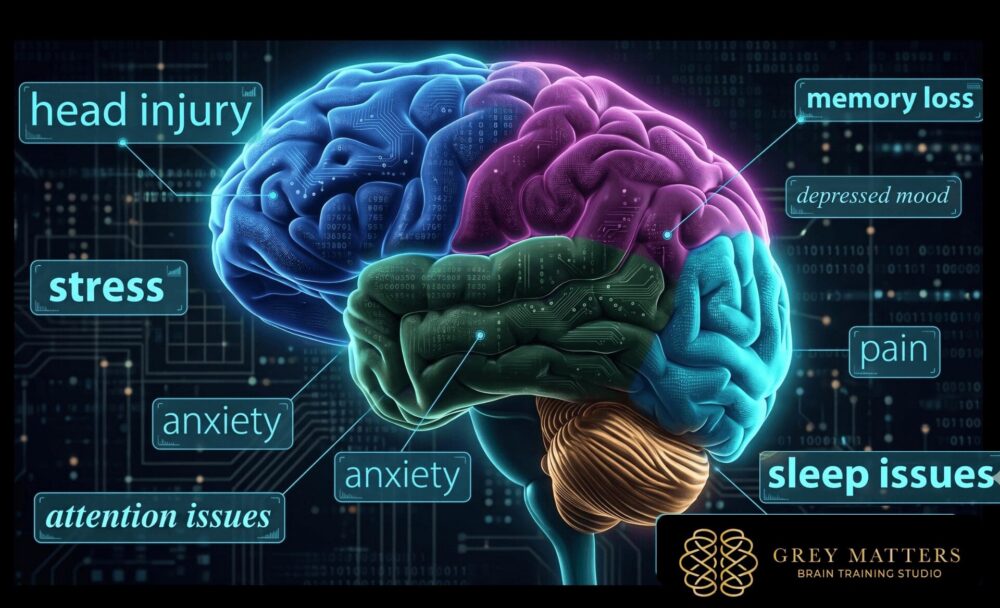
Brain Fog Symptoms: 10 Signs You’re Living With Brain Fog
Read Time:
8.9 minutes
Share This:

Are you reading the same sentence five times and still not absorbing it?
Walking into rooms and forgetting why?
Feeling like you are technically present… but not fully there?
That’s the frustrating thing about brain fog. It does not always feel dramatic. Sometimes it feels like your brain is moving through wet cement. Sometimes it feels like your thoughts are behind a glass wall. Sometimes it feels like you are doing all the right things, but your brain is still not cooperating.
Brain fog is not a diagnosis by itself. It is a way people describe a cluster of symptoms that can affect memory, focus, mental clarity, processing speed, and daily functioning. We see brain fog as symptoms that affect thinking, memory, and concentration.
And if you have been trying to explain it to someone who has never felt it, you already know how hard that can be.
Because brain fog is not just “being tired.”
It is not laziness.
It is not a character flaw.
Symptoms are clues, not character flaws.

What Does Brain Fog Feel Like?
Brain fog can feel different from person to person, but many people describe it as a cloudy, sluggish, disconnected, or mentally heavy feeling.
You may feel like your brain is buffering. You know what you want to say, but the words do not come out right. You start a task and forget what step comes next. You reread emails, lose your train of thought, or feel overwhelmed by decisions that used to feel simple.
For some people, brain fog feels like poor focus. For others, it feels like memory slips, slow thinking, mental fatigue, or feeling disconnected from the world around them.
That disconnected feeling can be one of the most unsettling parts.
You may be sitting with your family, driving to work, or standing in the grocery store and suddenly feel like you are going through the motions instead of fully participating. You are there, but you do not feel fully “online.”
That does not mean something is wrong with who you are. It means your brain may be giving you information worth paying attention to.
What Can Cause Brain Fog Symptoms?
Brain fog can have many possible contributors, which is why it should not be brushed off or reduced to one simple explanation.
It may be associated with poor sleep, chronic stress, hormonal changes, nutritional issues, certain medications, illness, inflammation, concussion history, trauma, anxiety, depression, autoimmune conditions, fibromyalgia, or long COVID. Research on long COVID has also connected brain fog with cognitive changes involving memory, attention, processing speed, and executive function.
This is why guessing is not a plan.
If brain fog is interfering with your life, it is worth talking with a qualified healthcare provider to rule out medical causes. At Grey Matters Brain Training Studio, a qEEG Brain Map helps us look at patterns in brain activity that may guide a more personalized brain training plan, to help you mitigate symptoms of Brain Fog.
Stop guessing. Start mapping.

10 Signs You’re Living With Brain Fog
1. You Keep Forgetting Small but Important Things
Everyone forgets things occasionally. But brain fog can make forgetfulness feel more frequent, more disruptive, or more frustrating than usual.
You may forget names, appointments, why you opened your phone, where you put your keys, or what someone told you five minutes ago.
This kind of forgetfulness can make daily life feel harder than it needs to be. You may start relying on sticky notes, reminders, lists, alarms, and mental gymnastics just to keep up.
The issue is not that you do not care. The issue may be that your brain is having a harder time holding and retrieving information efficiently.
2. You Have Trouble Focusing
One of the most common brain fog symptoms is difficulty concentrating.
You sit down to work, but your mind keeps drifting. You try to read, but the words blur together. You start cleaning one room and somehow end up half-finishing three different tasks.
Poor focus can show up at work, school, home, or in conversations. It can also make you feel like you are constantly behind, even when you are trying hard.
Because “just focus” is not a strategy.
If your brain is struggling to regulate attention, more pressure may only create more frustration.
3. Your Thinking Feels Slower Than Usual
Brain fog can make your thoughts feel delayed.
You may understand what is happening, but it takes longer to respond. You may need more time to process instructions, answer questions, or make sense of information.
This can be especially frustrating for adults who are used to being sharp, productive, and quick-thinking. You may still be capable, but everything feels like it requires more effort.
That slower processing can make daily decisions feel heavier than they should.
4. You Struggle to Find Words
You know the word.
It is right there.
But your brain refuses to hand it over.
Word-finding difficulty is a common way brain fog shows up. You may pause mid-sentence, use the wrong word, forget names, or feel like your thoughts are not translating clearly into speech.
This can make conversations feel embarrassing or exhausting, especially if you are used to communicating clearly.
The brain has receipts. If words are suddenly harder to access, that pattern is worth noticing.
5. You Feel Mentally Tired Even After Resting
Brain fog often comes with mental fatigue.
You may wake up after a full night of sleep and still feel like your brain has not recharged. You may get through a normal day but feel mentally drained by tasks that used to feel manageable.
This is different from ordinary tiredness.
Mental fatigue can make thinking itself feel effortful. Planning dinner, replying to texts, making decisions, or sitting through a meeting can feel like too much input.
Your brain may not be asking for more willpower. It may be asking for better support.
6. You Feel Disconnected or “Not Fully There”
Can brain fog make you feel disconnected?
For many people, yes. Brain fog can be associated with feeling mentally detached, spaced out, or not fully present.
This may feel like you are watching life happen instead of actively participating in it. You may feel emotionally flat, socially withdrawn, or strangely distant from your surroundings.
That does not mean you are broken.
It means your nervous system and brain may be under strain, overloaded, under-recovered, or struggling to regulate efficiently.
If this disconnected feeling is intense, sudden, or frightening, it is important to talk with a healthcare provider. But if it has become a recurring pattern alongside poor focus, fatigue, and memory slips, it may be part of the bigger brain fog picture.
7. You Have Trouble Following Conversations
Brain fog can make conversations harder to track.
You may lose the thread halfway through. You may ask someone to repeat themselves. You may nod along while secretly trying to catch up.
This can happen because conversation requires multiple brain skills at once: attention, processing speed, memory, emotional regulation, and response planning.
When those systems are tired or overloaded, even simple conversations can feel like work.
Over time, this can lead people to pull back socially. Not because they do not care, but because keeping up feels exhausting.
8. You Feel Overwhelmed by Simple Decisions
Brain fog can make decision-making feel strangely difficult.
Choosing what to eat, what task to start first, what email to answer, or what errand to run can feel bigger than it should.
This can happen when your brain is already working hard to process information. Even small choices require mental sorting, prioritizing, and follow-through.
When that system feels foggy, the brain may freeze.
This is why brain fog can look like procrastination from the outside, even when the inside experience is completely different.
9. You Are More Easily Distracted
If your attention keeps getting pulled away by every sound, notification, thought, or unfinished task, brain fog may be part of the pattern.
Distraction is not always about lack of discipline. Sometimes it reflects a brain that is having difficulty filtering information.
Your brain may be taking in too much at once and struggling to decide what matters most.
That can make work, school, parenting, errands, and even downtime feel scattered.
10. You Feel Like You Are “Functioning” but Not Really Yourself
This is one of the biggest signs people overlook.
You may still be going to work. Still answering messages. Still taking care of your family. Still checking the boxes.
But internally, you know something feels off.
You do not feel as clear, present, sharp, motivated, or emotionally connected as you used to.
That matters.
You do not need to wait until everything falls apart before you start asking better questions.
When Should You Pay Attention to Brain Fog Symptoms?
Occasional brain fog can happen after poor sleep, stress, illness, or an unusually demanding week.
But if brain fog is persistent, worsening, or interfering with your work, relationships, school, parenting, or daily routines, it is worth taking seriously.
You should also talk with a medical provider if brain fog appears suddenly, comes with severe headaches, fainting, weakness, confusion, vision changes, chest pain, or other concerning symptoms.
At Grey Matters, we are not here to replace your doctor. We are here to help you gather more information about how your brain may be functioning.
We are pro-information.
How Grey Matters Looks at Brain Fog Differently
Brain fog is often described in vague terms.
“Just tired.”
“Just stressed.”
“Just distracted.”
But vague symptoms still have patterns.
At Grey Matters Brain Training Studio, we use qEEG Brain Maps to look for patterns in brain activity so we can better understand how your brain may be functioning. A Brain Map is not a diagnosis for brain fog, ADHD, anxiety, depression, or any other mental health condition. It is information. And that information helps us build a personalized brain training plan focused on supporting self-regulation and helping mitigate symptoms.
Neurofeedback does not put anything into the brain. It is a training process that gives the brain feedback and may help support better self-regulation over time.
For some clients, that may be associated with improvements in focus, clarity, emotional regulation, sleep, or day-to-day functioning.
No promises. No guessing. More information.
Ready to Stop Guessing?
If you are living with brain fog symptoms, you do not have to keep explaining it away.
Forgetfulness, disconnection, poor focus, slow thinking, and mental fatigue are all clues. And clues are worth exploring.
Grey Matters Brain Training Studio helps clients better understand their brain patterns through Brain Mapping and personalized brain training.
Book a Comprehensive Brain Map and take the first step toward understanding what your brain may be trying to tell you.