How to Get Rid of Brain Fog: 7 Science-Backed Approaches

Brain fog is frustrating because it makes simple things feel harder than they should.
You sit down to work, but your brain will not cooperate.
You read the same sentence again and again.
You forget why you opened your phone.
You lose your words mid-conversation.
You feel like you are present, but not fully there.
And then comes the worst part: you start blaming yourself.
Maybe I’m lazy.
Maybe I’m getting older.
Maybe I’m just not trying hard enough.
Maybe this is just how my brain works now.
Not so fast.
Brain fog is not a personality flaw. It is not a motivation issue. It is not proof that you are broken.
Brain fog is a clue.
Medically reviewed health source described brain fog as a non-specific term for changes in thinking, focus, memory, attention, and mental clarity. Common contributors can include sleep deprivation, dehydration, low blood sugar, anemia, stress, hormonal changes, long COVID, ADHD, autism, chronic pain, autoimmune conditions, medication effects, and vitamin or mineral deficiencies.
In other words, if you want to know how to get rid of brain fog, the real question is:
What is your brain fog connected to?
Because “just focus harder” is not a plan.
First, Brain Fog Is a Symptom, Not the Whole Story
A lot of people search for “brain fog treatment” or “brain fog remedies” because they want the fog gone now. That makes sense. When your thinking feels slow, scattered, or disconnected, you want relief.
But brain fog does not usually have one single cause.
For one person, it may be poor sleep and stress.
For another, it may be blood sugar swings and dehydration.
For another, it may be hormone changes, gut inflammation, post-viral symptoms, or patterns in brain regulation.
That is why a one-size-fits-all approach usually falls short.
The goal is not to chase every supplement, productivity hack, or morning routine on the internet. The goal is to gather better information about your brain and body so you can stop guessing.
Symptoms are clues, not character flaws.
1. Start With Medical and Lifestyle Contributors
Before you assume brain fog is “just stress,” it is worth checking the basics.
Brain fog can be connected to health factors that deserve medical attention. These may include thyroid issues, anemia, vitamin B12 deficiency, hormone shifts, medication side effects, blood sugar concerns, autoimmune conditions, long COVID, sleep disorders, depression, anxiety, or neurological changes.
This does not mean you should panic.
It means you should get information.
Verywell Health notes that brain fog can be linked with many potential causes, including sleep deprivation, hypoglycemia, anemia, dehydration, depression, anxiety, hormonal changes, thyroid disease, malnutrition, vitamin B12 deficiency, long COVID, ADHD, autism, autoimmune diseases, and certain medications.
A helpful first step may be to talk with your healthcare provider, especially if your brain fog is new, worsening, persistent, or interfering with work, school, parenting, driving, or daily function.
You may want to ask about:
- Sleep quality
- Thyroid function
- Iron levels
- Vitamin B12 and vitamin D
- Blood sugar patterns
- Hormonal changes
- Medication side effects
- Recent illness or infection
- Anxiety, depression, or chronic stress
- Head injury or concussion history
The NIH Office of Dietary Supplements notes that vitamin B12 deficiency can be associated with symptoms such as tiredness, weakness, nerve symptoms, balance problems, depression, confusion, dementia, and poor memory. It also notes that B12 does not provide extra energy or performance benefits in people who already get enough from their diet.
That last part matters.
Supplements can be useful when there is a true deficiency. But randomly throwing supplements at brain fog without knowing what is low can become expensive guesswork.
Stop guessing. Start gathering data.
2. Protect Sleep Like It Is Brain Fuel

Sleep is one of the first places to look when brain fog shows up.
The brain does not simply “turn off” during sleep. Sleep supports memory, attention, emotional regulation, learning, repair, and daily mental performance.
The National Heart, Lung, and Blood Institute explains that sleep deficiency may happen when you do not get enough sleep, sleep at the wrong time, do not sleep well, or have a sleep disorder. It can interfere with work, school, driving, and social functioning, and may make it harder to learn, focus, and react.
If your brain fog is worse in the morning, after a restless night, or during high-stress seasons, sleep may be one of the biggest levers.
Start with the basics:
- Go to bed and wake up at consistent times.
- Get morning light within the first hour of waking.
- Reduce screens and bright light close to bedtime.
- Avoid using caffeine as a rescue plan late in the day.
- Keep the room cool, dark, and quiet.
- Pay attention to snoring, gasping, restless legs, or frequent waking.
This is not glamorous advice. It is also not optional.
A tired brain is not a lazy brain.
If you are getting enough hours but still waking up exhausted, that is information. You may need to look at sleep quality, not just sleep quantity.
3. Stabilize Blood Sugar, Hydration, and Nutrition
Your brain is an energy-hungry organ. When fuel is inconsistent, mental clarity can take a hit.
This does not mean everyone with brain fog needs a strict diet. It does mean your brain may not love long stretches without food, high-sugar meals followed by crashes, dehydration, or low protein intake.
Common nutrition-related brain fog patterns may include:
- You feel foggy mid-morning after coffee but no breakfast.
- You crash after a high-sugar meal.
- You feel shaky, irritable, or unfocused when meals are delayed.
- You rely on caffeine because food and hydration are inconsistent.
- You feel clearer after protein, water, and balanced meals.
Brain fog can be associated with dehydration, hypoglycemia, malnutrition, and vitamin or mineral deficiencies.
A practical starting point:
- Eat protein at breakfast.
- Add fiber-rich carbohydrates instead of only refined carbs.
- Include healthy fats, such as olive oil, avocado, nuts, or fatty fish.
- Drink water before more caffeine.
- Notice whether symptoms improve when meals are consistent.
- Avoid making huge diet changes without professional guidance if symptoms are significant.
Think of this as giving the brain a steadier signal.
If your brain fog improves when you eat, hydrate, or reduce sugar crashes, that is not random. That is your brain leaving receipts.
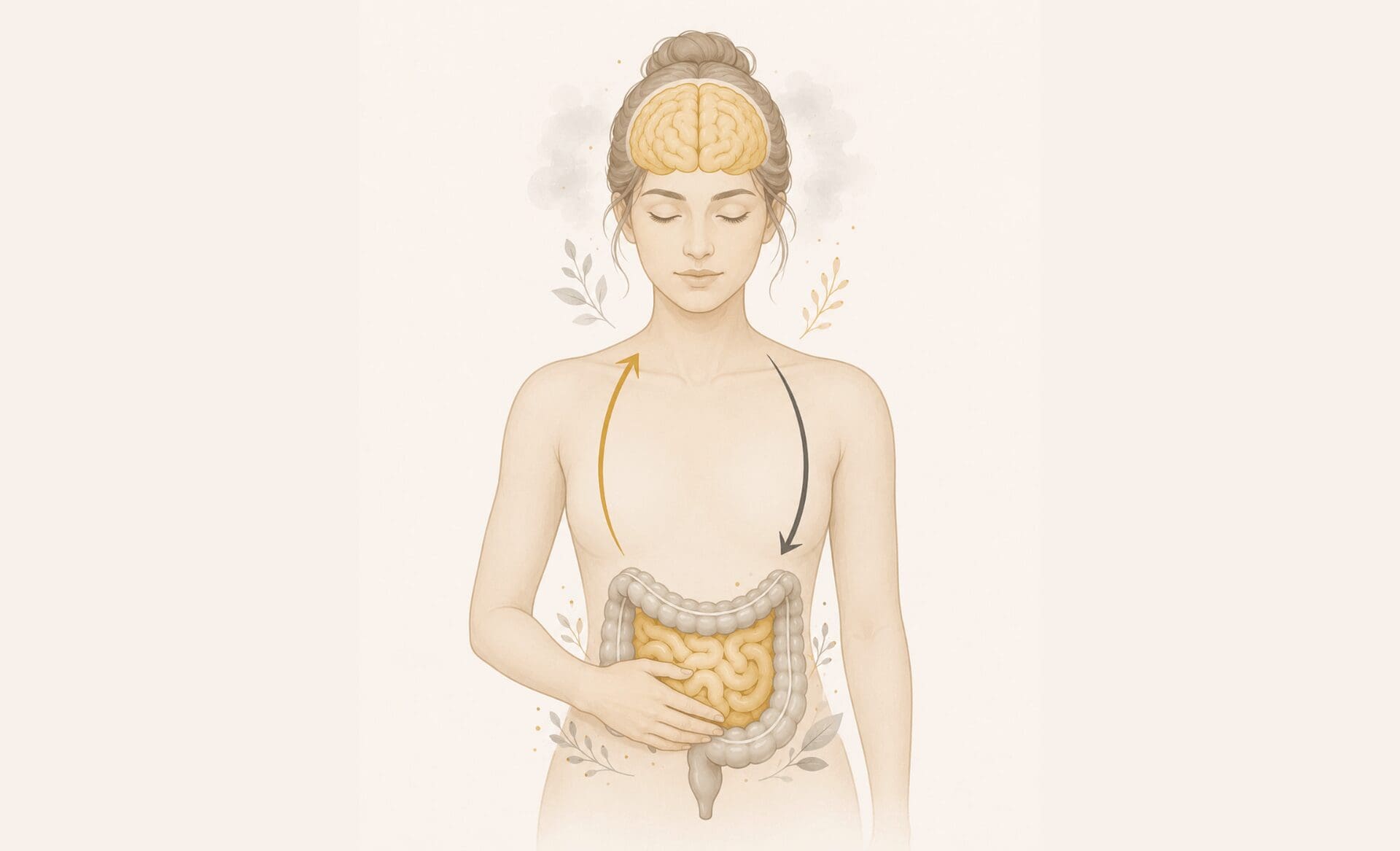
4. Look at Gut Health and Inflammation
The brain is not floating alone in a jar.
Your gut, immune system, nervous system, hormones, and brain are in constant communication. This is why gut issues, inflammation, food sensitivities, constipation, bloating, and stress can sometimes show up alongside mood, focus, and energy changes.
The gut-brain connection is not internet fluff. The microbiome is an active area of NIH-supported research, and researchers are studying how diet-microbiome interactions may produce substances with beneficial health effects. NCCIH notes that probiotics may affect the body in different ways, including helping maintain a healthy community of microorganisms, producing substances with desirable effects, and influencing immune response.
But we need to be careful here.
Probiotics are not magic. Gut health is not a guaranteed answer for every case of brain fog. NCCIH also notes that while a great deal of research has been done on probiotics, much remains to be learned about whether they are helpful and safe for various health conditions.
That balanced view is important.
For some people, gut support may be part of the picture. For others, sleep, stress, hormones, medications, or brain regulation patterns may matter more.
At Grey Matters, this is one reason a Comprehensive Brain + Gut Map may be useful for certain clients. The goal is not to diagnose brain fog from gut symptoms. The goal is to look for patterns that may help guide a more personalized plan.
The brain and gut are in a group chat all day.
5. Reduce Stress Load Instead of Just “Relaxing More”
Telling someone with brain fog to “just relax” is not very helpful.
A better question is:
How much load is your nervous system carrying every day?
Stress can affect sleep, digestion, attention, energy, emotional regulation, and decision-making. NIMH describes stress as a physical or mental response to an external cause and notes that stress and anxiety can affect the mind and body, including symptoms such as excessive worry, tension, headaches or body pain, high blood pressure, and loss of sleep.
If your nervous system is constantly running in high-alert mode, your brain may have less capacity available for focus, memory, patience, and clear thinking.
That does not mean stress is “all in your head.”
Mental health is not just mindset.
Stress support may include:
- Short breathing breaks throughout the day
- Walking outside without headphones
- Journaling to get thoughts out of your head
- Reducing unnecessary multitasking
- Creating realistic task lists
- Setting boundaries around screens and work
- Asking for help before you are fully depleted
- Working with a qualified mental health professional when needed
NIMH suggests practical coping steps such as journaling, relaxation exercises, mindfulness, exercise, regular meals, sleep routines, limiting excess caffeine, challenging unhelpful thoughts, and reaching out to supportive people.
This is not about becoming perfectly calm.
It is about giving your brain fewer fires to put out.
6. Move Your Body to Support Your Brain

Movement is not just for muscles.
Physical activity can support sleep, mood, blood flow, energy regulation, and cognitive function. The U.S. Physical Activity Guidelines for Americans note that regular physical activity provides benefits including improved brain health, positive effects on how people feel, function, and sleep, and other benefits for older adults and people with long-term conditions.
If you are foggy and exhausted, you may not need a punishing workout.
You may need a tolerable starting point.
That could look like:
- A 10-minute walk after lunch
- Gentle stretching between work blocks
- Light strength training two days a week
- Walking outside before starting computer work
- Taking movement breaks instead of pushing through mental shutdown
The key is consistency.
For some people, movement gives the brain a clearer signal. For others, especially people dealing with post-viral fatigue or conditions where exertion worsens symptoms, the plan should be more careful and medically guided.
Do not ignore your body’s feedback.
Pushing harder is not always the answer. Training smarter usually is.
7. Map Brain Patterns and Consider Neurofeedback
Lifestyle changes can help many people. But some adults do the basics and still feel stuck.
They sleep more and still feel foggy.
They eat better and still feel scattered.
They use planners and still forget everything.
They reduce stress and still feel disconnected.
They try to focus, but their brain will not hold the signal.
That is where brain-based data may be useful.
At Grey Matters Brain Training Studio, a qEEG Brain Map helps us look at brainwave patterns and better understand how your brain may be operating. A Brain Map does help us mitigate symptoms of ADHD, anxiety, depression, PTSD, brain fog, or any other condition. Doctors diagnose. A Brain Map helps us see patterns that may guide a personalized brain training plan.
Neurofeedback is a form of brain training that uses sensors to read brainwave activity and provide feedback to the brain. A review published in Basic and Clinical Neuroscience describes neurofeedback as a type of biofeedback that teaches self-control of brain functions by measuring brain waves and providing audio or video feedback. The same review also notes that current research does not support conclusive results about its efficacy across all uses, which is why careful, non-promissory language matters.
That is exactly how Grey Matters should position it.
- Neurofeedback is not the only approach to brain fog.
- It is not a magic reset.
- It is not a replacement for medical care.
- It does not work the same for everyone.
But for some people, neurofeedback may help support the brain’s ability to self-regulate, especially when symptoms involve focus, mental fatigue, sleep patterns, attention, or feeling stuck in overarousal or underarousal.
The goal is not to chase symptoms one by one.
The goal is to understand the pattern.
Stop guessing. Start mapping.
What About Brain Fog After COVID?
Brain fog after COVID deserves its own mention because many adults noticed a major shift after infection.
Long COVID research continues to develop, but cognitive symptoms are being taken seriously. A large study reported in The Guardian and published in the New England Journal of Medicine found measurable memory and cognitive deficits in people experiencing long COVID, especially among those with unresolved symptoms lasting more than 12 weeks.
If your brain fog started after COVID or another viral illness, do not dismiss it.
You may need a more careful plan that considers fatigue, sleep, inflammation, nervous system regulation, and pacing. If exertion makes symptoms worse, pushing through can backfire. Work with a qualified medical provider if symptoms are persistent, severe, or worsening.
When Should You Get Help for Brain Fog?
Consider getting professional support if brain fog is:
- Interfering with work, school, parenting, or relationships
- Getting worse over time
- Happening after COVID, concussion, or major illness
- Paired with dizziness, headaches, fainting, heart palpitations, or severe fatigue
- Causing confusion, safety concerns, or major memory lapses
- Not improving with sleep, nutrition, hydration, and stress support
- Making you feel disconnected from yourself or your life
Verywell Health recommends seeing a healthcare provider when brain fog is persistent, recurrent, unexplained, or interfering with quality of life, especially when it comes with other symptoms.
You do not need to wait until everything falls apart.
You are allowed to ask better questions now.
A Simple 7-Day Brain Fog Reset
Here is a realistic starting point if you want to begin this week:
Day 1: Track when brain fog shows up: morning, afternoon, after meals, after screens, after poor sleep, after stress, or after social overload.
Day 2: Prioritize sleep consistency. Same wake time, morning light, less screen time before bed.
Day 3: Add protein and hydration before caffeine. Notice if your focus changes.
Day 4: Take a 10-minute walk or movement break. Do not overdo it.
Day 5: Reduce one major stress input: multitasking, late-night work, constant notifications, or skipped meals.
Day 6: Notice gut patterns: bloating, constipation, food reactions, or energy dips after meals.
Day 7: Ask whether you need more data instead of more guessing.
This is not a full plan. It is a starting point.
If your brain fog improves, you have clues.
If it does not improve, you also have clues.
The brain has receipts.
The Grey Matters Approach: More Data, Less Guessing
At Grey Matters Brain Training Studio, we look at brain fog as a signal.
Your symptoms may be pointing to patterns in sleep, stress, gut health, inflammation, nervous system regulation, or brainwave activity. That is why we do not believe in guessing your way through brain fog forever.
A Comprehensive Brain Map helps us look at brainwave patterns that may be connected to focus, processing, attention, sleep, and regulation.
A Comprehensive Brain + Gut Map may be a better fit when gut symptoms, inflammation patterns, or digestive issues seem connected to mood, focus, or energy.
Neither map diagnoses a condition.
They help us understand patterns so we can create a more personalized brain training plan.
If your brain feels slow, scattered, foggy, or disconnected, you are not broken.
You may just need better information.

Ready to Understand What May Be Contributing to Your Brain Fog?
If you are tired of guessing, Grey Matters can help you take the next step.
Map your brain patterns to understand what may be contributing to your brain fog.
Book a Comprehensive Brain Map or Comprehensive Brain + Gut Map with Grey Matters Brain Training Studio in Carmel, Indiana.
Frequently Asked Questions
The gut and brain communicate constantly through the gut-brain axis — a two-way network of nerves, hormones, immune signals, and bacterial metabolites. Research links the balance of gut bacteria to mood and cognitive function, though much of the science is still early. Gut health may be one contributing factor to brain fog for some people, which is why some choose to look at both.
Gut health may be part of the picture for some people. The gut and brain communicate through the nervous system, immune system, hormones, and microbiome-related pathways. However, gut health is not the only possible cause of brain fog.
Yes. Stress can affect sleep, attention, digestion, energy, and nervous system regulation. For some people, chronic stress can make thinking feel slower, scattered, or disconnected.
There is no single best brain fog remedy because brain fog can have many causes. Sleep, hydration, nutrition, stress support, gut health, movement, medical evaluation, and brain training may all play a role depending on the person.
Start with the basics: hydrate, eat a balanced meal with protein, take a short walk, reduce multitasking, and rest if you are sleep-deprived. If brain fog is persistent, the better question is what is contributing to it.
No. A qEEG brain map shows patterns in your brain’s electrical activity to help guide a personalized training plan. It does not diagnose ADHD, anxiety, depression, or any other condition, and it is not a medical diagnosis of what is causing your brain fog.
Brain fog itself is not usually considered a diagnosis. It is a symptom. If it is persistent, new, worsening, or interfering with life, it is important to talk with a healthcare provider to rule out medical contributors.
Yes. Many people describe brain fog as feeling mentally distant, emotionally flat, or disconnected from daily life. This can happen when the brain is tired, stressed, inflamed, overstimulated, or struggling to regulate efficiently.
Brain fog may feel like slow thinking, forgetfulness, mental fatigue, trouble concentrating, word-finding issues, or feeling disconnected from your surroundings. Some people describe it as feeling like their brain is buffering.
Yes — sleep, hydration, exercise, and addressing underlying inflammation make an enormous difference. Neurofeedback works faster and holds better when these foundations are in place. We often coach clients on these basics because the results are bigger when the brain has what it needs.
This is a concern we hear often. Brain fog tends to fluctuate, is linked to identifiable stressors, and improves when those stressors resolve. Early dementia tends to be more gradual, progressive, and involves memory loss that the person may not be fully aware of. If you are worried, a cognitive evaluation with your physician is the right first step. Neurofeedback is not a substitute for that evaluation.
Sometimes brain fog is tied to stress, poor sleep, or hormones, and sometimes it points to a deeper issue that needs medical evaluation. If symptoms are persistent, worsening, or concerning, it is important to talk with your healthcare provider.
It may. Hormonal shifts can absolutely affect brain function, and neurofeedback can be one helpful piece of support alongside appropriate medical care.
It may. Many people explore neurofeedback when long COVID brain fog lingers and continues to affect focus, clarity, and energy.
Some clients notice subtle improvements early on, while others need more time and repetition. It often builds gradually.
For many people, it may. Where a brain map shows inefficient patterns, neurofeedback is a non-invasive way to help the brain learn to self-regulate, and many clients report clearer thinking and better focus over time. Results vary, and it works best alongside — not instead of — addressing underlying factors like sleep, hormones, and gut health.
Brain fog can be connected to stress, poor sleep, hormone shifts, long COVID, concussion history, inflammation, gut issues, or other health concerns.
Brain fog is a symptom, not a diagnosis. It can feel like slow thinking, poor concentration, forgetfulness, mental fatigue, or difficulty finding words.