
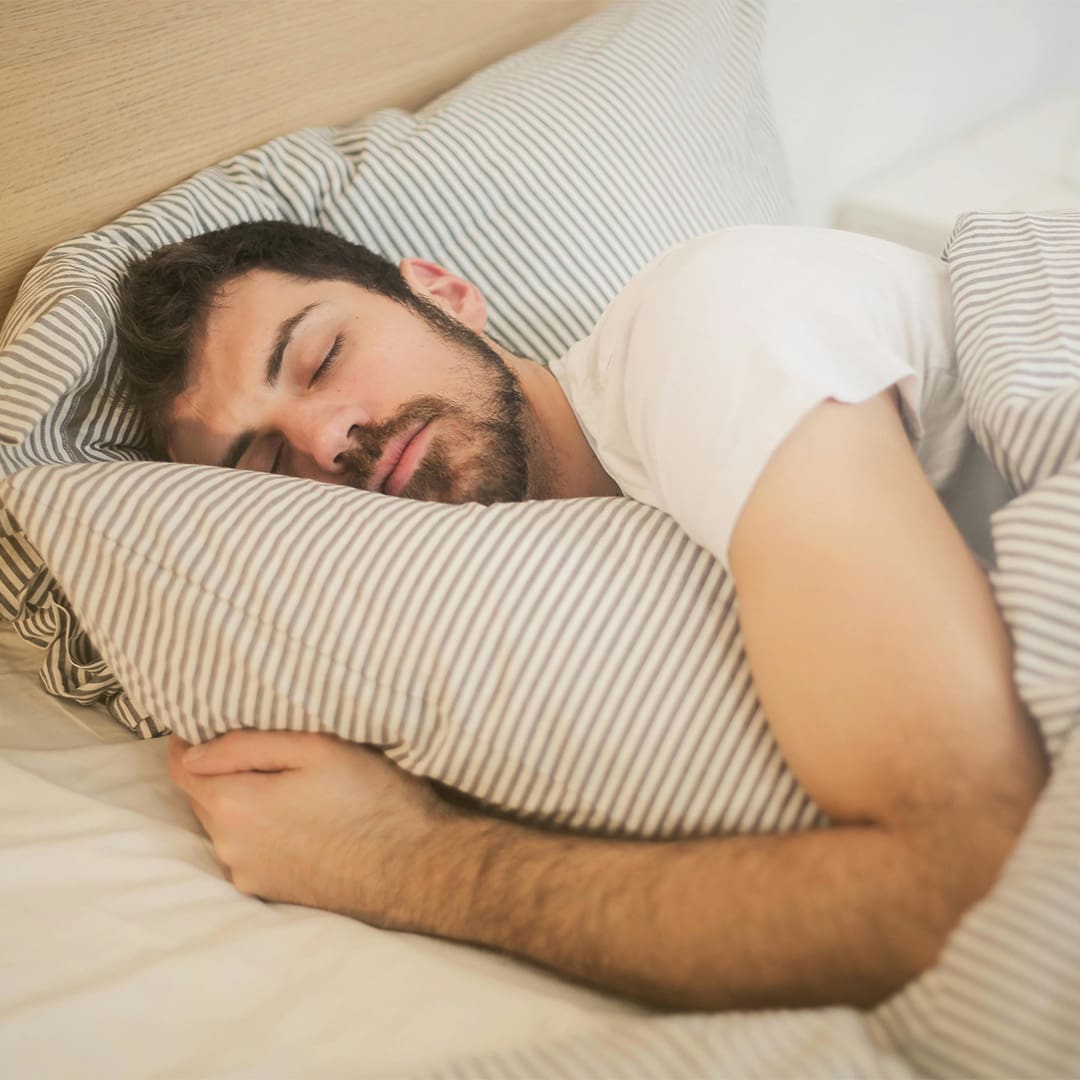
Sleep deprivation or insomnia has become all too common, posing significant risks to both brain and body health. The Centers for Disease Control and Prevention has labeled insufficient sleep as a public health crisis, akin to the warnings issued about smoking decades ago.
Even one night of inadequate sleep can yield measurable effects, including delayed reaction times, mood swings, impaired memory, and hormonal imbalances. Prolonged sleep deprivation can result in chronic pain, cognitive decline, and compromised coordination. Research indicates that just one week of insufficient sleep can trigger changes in over 700 genes.
For those grappling with sleep disorders such as insomnia or narcolepsy, the challenges can be particularly daunting. Neurofeedback has emerged as a promising solution for improving sleep quality and managing symptoms effectively.
Frequently Asked Questions
About Insomnia & Sleep Disorder
We’ve gathered a list of commonly asked questions about Insomnia and Sleep Disorder, for your convenience. If you don’t see the information you need, please don’t hesitate to reach out to us. Simply click on the question that interests you to navigate directly to the relevant section.
Yes — sleep is actually one of the first things most clients notice changing, regardless of what they came in for. Insomnia usually involves a brain that cannot downshift out of fast beta-wave activity at night. Neurofeedback trains the brain to produce more slow-wave activity on command, which translates into falling asleep faster and staying asleep longer.
Many clients notice changes within the first 5 to 10 sessions — easier sleep onset, fewer middle-of-the-night wake-ups, deeper rest, waking up actually feeling refreshed. Full benefit typically comes by sessions 20 to 30.
Sleep medications knock you out chemically but do not restore natural sleep architecture — the deep stages the body needs for real recovery. Neurofeedback helps the brain produce natural, restorative sleep on its own. Many clients are able to reduce or eliminate sleep medications after training, in coordination with their physician.
Yes. Middle-of-the-night waking usually reflects a brain that cannot stay in deep sleep stages. Neurofeedback trains more stable sleep patterns, which reduces those wake-ups.
Both often respond well, especially when they are related to trauma or high arousal. Parents of children with night terrors frequently report dramatic reductions after a series of training sessions.
Yes. Sleep apnea is a mechanical airway issue, not a brainwave issue. Keep using your CPAP as prescribed. Neurofeedback can help with the brain-based aspects of sleep that CPAP alone does not address — like lingering insomnia even when apnea is treated.
The brain tends to hold onto the learned pattern. Many clients enjoy years of improved sleep after a single training series. Occasional booster sessions can help during particularly stressful seasons.
Your child may take a long time to fall asleep because of inconsistent routines, screen use, anxiety, overtiredness, caffeine, sensory overload, or a delayed body clock. Teens may also naturally feel sleepy later because sleep timing shifts during adolescence.
Night waking can happen because of sleep habits, nightmares, anxiety, separation needs, discomfort, snoring, breathing issues, or restless sleep. If your child wakes often and also snores, gasps, breathes heavily, or seems very tired during the day, talk with your pediatrician.
Yes, worry and nighttime fears can make it harder for children to fall asleep or stay asleep. If nighttime worries are ongoing, severe, or affecting daily life, it is worth seeking professional support.
Many children with attention, sensory, emotional regulation, or developmental differences also struggle with sleep. The reason may vary from child to child, so it is important to look at the whole pattern: bedtime routine, sensory needs, anxiety, screen use, breathing, movement, and daytime functioning.
Ask your pediatrician before using melatonin or any sleep supplement. Pediatric sleep problems should be evaluated in context, especially if they are persistent, worsening, or connected to daytime sleepiness, mood changes, snoring, or attention and behavior concerns.
No. A Brain Map does not diagnose insomnia, sleep apnea, anxiety, ADHD, autism, depression, or any medical condition. It helps identify functional brain activity patterns that may guide personalized neurofeedback brain training recommendations. Grey Matters clearly states that qEEG Brain Mapping is not a diagnostic tool and does not replace medical diagnosis.
Neurofeedback may help support brain self-regulation for some children, especially when sleep concerns appear alongside focus challenges, emotional regulation struggles, stress tolerance issues, or sensory overwhelm. Results vary, and neurofeedback should be framed as a supportive brain training option, not a guaranteed solution or replacement for medical care.
Grey’s Plan — The Most Complete
Brain Training We Offer
If you want the most comprehensive, all-inclusive, guided solution for focus, behavior, and overall brain health—for your child or yourself, Grey’s Plan gives you everything needed to make the next 4 months the turning point.
Neurofeedback alone is powerful.
But when you combine brain training with gut testing, clinical oversight, and unlimited support, results come faster, smoother, and last longer.

Sources: 1. S., C., Archer, S. N., Bucca, G., Laing, E. E., Slak, A., Kabiljo, R., Lo, J. C., Santhi, N., von Schantz, M., Smith, C. P., & Dijk, D. (2013). Effects of insufficient sleep on circadian rhythmicity and expression amplitude of the human blood transcriptome. Proceedings of the National Academy of Sciences, 110(12), E1132-E1141. https://doi.org/10.1073/pnas.1217154110
2. Bekker, M. Balt, K., Bipath, P., Jordaan, J., du Toit, P. (2021). The effect of infra-slow fluctuation neurofeedback training on a cohort of insomnia participants. NeuroRegulation, 8(3), 137-148. https://doi.org/10.15540/nr.8.3.137
3. Lazar, Z. I., Dijk, D., Lazar, A. S. (2017). Infraslow oscillations in sigma and sleep spindle activity in humans: effect of frequency, topography, sleep history and circadian phase. Sleep Medicine, 40: e181. https://dx.doi.org/10.1016/j.sleep.2017.11.529