
Types of Autism: Understanding Autism Spectrum Levels

If you’ve started researching autism — for yourself, your child, or someone you love — you’ve probably run into a wall of confusing terms. Asperger’s. High-functioning. Level 2. Classic autism. Some of these terms are outdated. Some are official. Some are used by doctors and schools but avoided by autistic adults themselves. It’s a lot to untangle, especially when you’re already navigating something emotional.
Here’s the short version: since 2013, there’s only been one official diagnosis — Autism Spectrum Disorder (ASD) — and it comes with three “levels,” which describe how much support a person needs, not how “severe” or “mild” their autism is. That distinction matters more than it might seem.
This guide breaks down what the three autism levels actually mean, how we got here, and why “support needs” is a far more useful way to think about autism than the functioning labels you may have grown up hearing.
Your child is not broken. Understanding their pattern is the first step.
Understand your child’s unique brain patterns → Book a Comprehensive Brain Map
How Autism Went From Several Diagnoses to One Spectrum
If you’re a parent in your 30s or 40s, you may remember a time when “Asperger’s syndrome” and “autism” were treated as two different things. That changed in 2013, when the American Psychiatric Association released the fifth edition of the Diagnostic and Statistical Manual of Mental Disorders (DSM-5). Autistic disorder, Asperger syndrome, childhood disintegrative disorder, and pervasive developmental disorder–not otherwise specified (PDD-NOS) were all folded into a single diagnosis: Autism Spectrum Disorder, or ASD.
The reasoning was straightforward: research showed these weren’t actually separate conditions. They were different presentations of the same underlying neurodevelopmental pattern, and drawing hard lines between them didn’t reflect how autism actually shows up in real people. Someone who might have been diagnosed with Asperger’s in 2005 would today receive an ASD diagnosis with a “Level 1” support designation.
To be diagnosed with ASD under the DSM-5, a person must show persistent differences in social communication and social interaction, along with restricted or repetitive patterns of behavior, interests, or activities — present from early childhood, even if they aren’t recognized until later. From there, clinicians assign a level of support for each of those two domains, which is where the numbers 1, 2, and 3 come in.
The Three Autism Levels, Explained

According to the DSM-5 criteria published by Autism Speaks, the three levels are:
Level 1: “Requiring Support”
This is the level most people mean when they informally (and inaccurately) say “high-functioning autism.” A person at Level 1 can typically communicate in full sentences and function independently in many day-to-day settings, but still experiences real challenges: difficulty initiating social interactions, trouble reading nonverbal cues like tone or body language, and a strong preference for routine that can make unplanned change genuinely distressing.
Someone at Level 1 might come across as capable, articulate, and independent — while quietly working much harder than their peers to manage transitions, social expectations, and sensory input. That effort is invisible from the outside, which is exactly why Level 1 autism is so often missed, especially in adults and in girls and women. We cover that pattern in more depth in our guide to high-functioning autism.
Level 2: “Requiring Substantial Support”
At Level 2, social communication differences are more noticeable even to unfamiliar observers. This might include limited eye contact, unusual conversational rhythm, or reduced or atypical responses to social interaction. Repetitive behaviors and restricted interests are frequent enough to interfere with functioning across multiple settings — home, school, and community — and changing routines or coping with unexpected change tends to cause significant distress.
People at Level 2 generally need consistent, structured support to navigate daily life successfully, though the specific type of support varies enormously from person to person.
Level 3: “Requiring Very Substantial Support”
Level 3 describes the most significant support needs. Verbal communication may be very limited, and social interaction is often minimal — limited initiation, minimal response to others reaching out. Repetitive behaviors, fixated interests, or rigid routines are pronounced enough that they markedly interfere with functioning in all areas of life, and shifting focus away from those patterns can be extremely difficult.
Level 3 support needs are typically lifelong and substantial, though — and this is worth saying clearly — a Level 3 designation says nothing about a person’s inner world, intelligence, or capacity for connection. It describes support needs, not human worth.
What the Levels Actually Measure — And What They Don’t
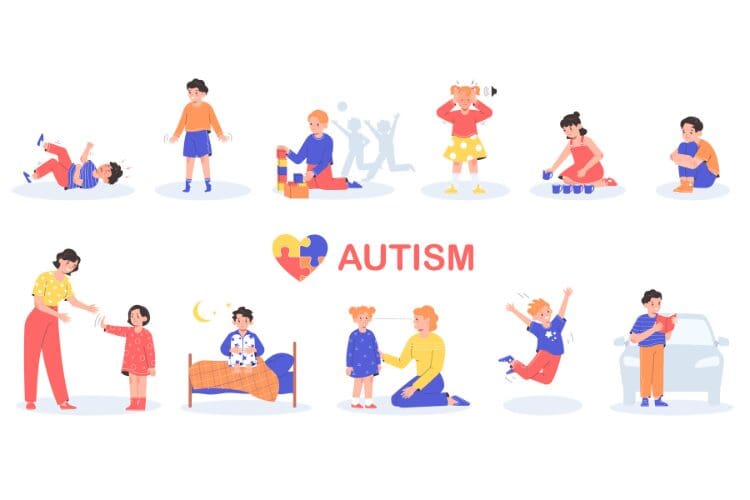
It’s worth repeating, because it’s the single most misunderstood part of this entire system: autism levels measure support needs, not severity, and definitely not intelligence.
A person can be extremely intelligent, articulate, and successful in specific domains, and still have Level 2 or Level 3 support needs. Likewise, someone with Level 1 support needs can struggle enormously with things that look “easy” from the outside — holding a job, managing a household, or navigating friendships — because Level 1 doesn’t mean “barely autistic.” It means the specific combination of support needs happens to fall on the lower-intensity end of a wide, individual spectrum.
Autism levels are also not fixed for life. A child’s assessed level can change over time with development, environment, and support — and even within one person, support needs can look different across settings (a person may need more support in a loud, unfamiliar environment and far less at home). The levels are a snapshot, useful for planning support, not a permanent label stamped on a person’s identity.
Why “High-Functioning” and “Low-Functioning” Are Falling Out of Use
You’ll still hear “high-functioning autism” and “low-functioning autism” constantly — in casual conversation, in older articles, sometimes even from well-meaning professionals. But these terms were never part of the official DSM criteria, and there’s a growing, well-documented consensus — from clinicians and from the autistic community itself — that they do more harm than good.
The Autistic Self Advocacy Network and many autistic adults have spoken directly about how these labels distort support. “High-functioning” can lead to real struggles being dismissed or disbelieved — a person masking exhaustion and sensory overload behind a composed exterior, told they “don’t seem autistic” and denied support as a result. “Low-functioning,” on the other hand, can lead to chronically low expectations, with a person’s strengths, communication abilities, and inner life underestimated or overlooked entirely.
As one autistic writer put it in Psychology Today, the autism spectrum isn’t a straight line from “very autistic” to “a little autistic” — it’s closer to a wheel with many different, independent dimensions. A person can have significant support needs in one area of life and very few in another, at the same time.
This is why most clinicians, researchers, and autism organizations now favor support-needs language (the DSM-5 levels, or simply describing what kind of support someone actually needs) over blanket functioning labels. It’s more accurate, and it treats the person describing their own experience as the authority on what that experience is like.
How Common Is Autism? What the Latest Data Shows
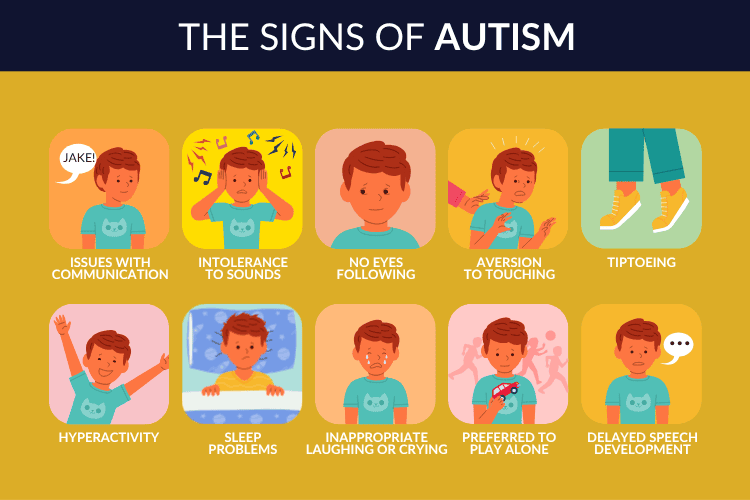
Autism is more commonly identified today than at any point since tracking began. The CDC’s most recent data, released in 2025 from the Autism and Developmental Disabilities Monitoring (ADDM) Network, found that about 1 in 31 (3.2%) 8-year-old children in the U.S. has been identified with ASD — up from 1 in 36 just two years earlier, and a substantial increase from 1 in 150 when monitoring began in 2000.
Researchers attribute most of this rise to better awareness, broader diagnostic criteria, and expanded access to screening and evaluation — not necessarily a true increase in how many children are born autistic. Boys continue to be identified roughly three times more often than girls, a gap that researchers increasingly link to the same kind of under-recognition we see in adult women: autism in girls often looks different, and diagnostic tools were built around how autism shows up in boys.
Getting a Diagnosis vs. Understanding the Pattern
A formal ASD diagnosis can only be made by a qualified medical or psychological professional through a comprehensive evaluation — developmental history, direct observation, and standardized assessment tools. That process matters, because a diagnosis can open the door to school accommodations, therapies, and services.
What Grey Matters offers is different, and we want to be upfront about exactly what it is and isn’t. A Comprehensive Brain Map uses qEEG (quantitative electroencephalography) to look at patterns in your child’s — or your own — brain activity. It does not diagnose autism, and it isn’t a substitute for a formal developmental evaluation. What it can offer is a different kind of information: an objective look at brain activity patterns that may help guide a personalized approach to neurofeedback and self-regulation support, alongside whatever other evaluation and care your family is already pursuing.
If you’re earlier in the process and wondering what a first brain mapping appointment actually involves, we’ve laid it out step-by-step in what to expect at your first brain mapping appointment.
Ready to understand your child’s brain patterns? Schedule a consultation →
A Note on Neurofeedback and Autism
As with everything we write, we want to give you the real state of the research — not a sales pitch.
Neurofeedback for autism is an active area of study, and it’s genuinely mixed. A 2020 systematic review in the Journal of Psychophysiology looked at 20 studies and found that a high percentage of non-randomized trials reported positive results, with even stronger findings among the smaller number of randomized controlled studies available — but the review authors were clear that study quality varies widely, and more rigorous research is still needed before firm conclusions can be drawn.
Earlier reviews were more cautious still. One widely cited analysis found that existing literature at the time didn’t clearly support neurofeedback specifically for autism symptoms, and suggested that some earlier “positive” results may have reflected improvement in co-occurring ADHD symptoms rather than core autism traits. Small sample sizes, short study durations, and inconsistent protocols remain real limitations across this body of research.
Our honest position: neurofeedback is not a treatment or cure for autism, and it does not diagnose autism. What many families report is that it may help support self-regulation — things like emotional regulation, attention, and coping with transitions — as one piece of a broader, individualized support plan that may also include therapy, occupational support, educational accommodations, and medical care. We’re not anti- any of those approaches. We think families deserve accurate information and the ability to make informed decisions about what combination of support fits their child.
Frequently Asked Questions
No. A qEEG brain map shows patterns in brain activity and may help guide a personalized approach to neurofeedback and self-regulation support. It is not a diagnostic tool — an autism diagnosis requires evaluation by a qualified medical or psychological professional.
“High-functioning” is an informal term, not an official diagnostic category, and it’s increasingly discouraged because it can minimize real struggles. Level 1 is the official DSM-5 designation and refers specifically to support needs, not intelligence or overall ability.
Yes. A person’s assessed support needs can shift with development, environment, and support received — and can even look different across different settings for the same person. Levels are a snapshot for planning support, not a permanent label.
No. Since the DSM-5 was published in 2013, Asperger’s syndrome, autistic disorder, childhood disintegrative disorder, and PDD-NOS were all combined into one diagnosis: Autism Spectrum Disorder. Someone previously diagnosed with Asperger’s would generally fall under Level 1 ASD today.
Level 1 (“requiring support”), Level 2 (“requiring substantial support”), and Level 3 (“requiring very substantial support”). They describe the intensity of support a person needs in social communication and restricted/repetitive behaviors — not how “severe” their autism is overall.
The Pattern Matters More Than the Label
Whatever level, term, or label you’ve encountered in your research, the most useful question isn’t “how severe is this?” It’s “what support does this specific person actually need, right now, in their specific life?” That question leads somewhere useful. The old functioning labels mostly don’t.
If you’re trying to understand your own brain, or your child’s, brain mapping can be one piece of that picture — real data, not a label.
Book a Comprehensive Brain Map and start with real data about your child’s brain →
Please note that this article is intended strictly for educational purposes and does not constitute medical advice, diagnosis, or treatment. Grey Matters Brain Training Studio does not diagnose, cure, or treat Autism Spectrum Disorder or any medical condition. Rather, we offer brain training and neurofeedback designed to help manage and mitigate symptoms of Autism. If you believe that you or your child may be on the autism spectrum, we encourage you to seek a formal evaluation from a licensed physician, psychologist, or developmental specialist.