
Professional Partnership Program — For Occupational Therapists
Helping Clients Build Skills Starts with Supporting Self-Regulation.
Occupational therapists help people participate more fully in everyday life.
Whether you’re working on sensory processing, emotional regulation, executive functioning, motor planning, attention, or daily living skills, your goal is helping clients become more independent and successful in the occupations that matter most.
45 min
Brain Map Session
1 hour
Review with an rn
Non-invasive
no medication

At Grey Matters, We Share Sour Goal.
Our role is different—but complementary. Through Brain Mapping (qEEG), neurofeedback, and our whole-person Brain + Gut approach, we help individuals better understand how their brain may be functioning and offer supportive services designed to promote self-regulation and overall brain wellness.
We don’t replace occupational therapy. We help support the nervous system while you continue building the skills that change lives.
Does this sound familiar
Do You Work with Clients Who…
Tick the ones you recognize. It takes fifteen seconds and tells you whether a conversation with us is worth your time.
Why Occupational Therapists Refer to Grey Matters
Occupational Therapy Helps Clients Develop Meaningful Life Skills.
Neurofeedback has a different role. Rather than teaching new skills, neurofeedback provides real-time feedback that allows the brain to practice healthier patterns of self-regulation over time.
Many occupational therapists who partner with Grey Matters appreciate having another resource available for clients whose nervous systems may make it difficult to consistently access the skills they are working so hard to develop.
Every individual’s experience is unique, and we never promise specific outcomes. Our goal is simply to complement the work you’re already doing.
What is neurofeedback?
Neurofeedback is a non-invasive form of brain training.
During a session, sensors placed on the scalp record brainwave activity while the client watches a movie or participates in a simple computer-based activity.
The sensors record activity only—they do not stimulate the brain or send electricity into it.
The feedback helps the brain recognize and practice more efficient patterns of activity over time.
Many individuals explore neurofeedback to support:
Neurofeedback is individualized and is not intended to diagnose or replace medical, behavioral, or therapeutic care.
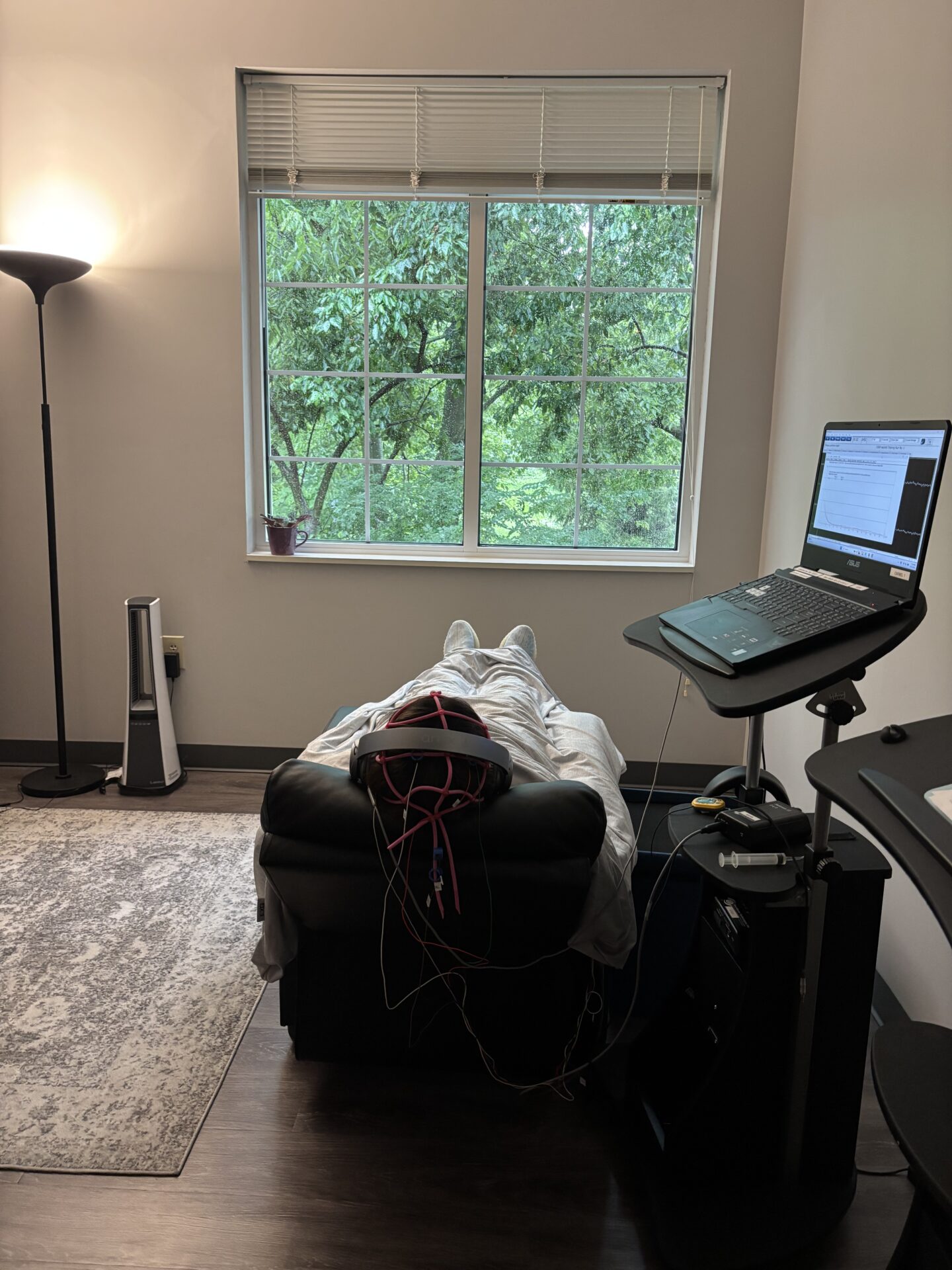


The Brain Map is not a diagnostic tool. Instead, it serves as another piece of information that may help families better understand their options.
It All Begins with a Brain Map
Objective information before any recommendation.
Every client starts with a quantitative EEG (qEEG), commonly known as a Brain Map.
Painless, non-invasive, ~45 minutes
Nothing is introduced to the brain — activity is only recorded.
A one-hour review with Courtney Reimmuth, RN
She explains the findings, answers questions, and discusses whether neurofeedback or other services may be appropriate.
Our Brain + Gut philosophy
A Whole-Person Approach to Regulation
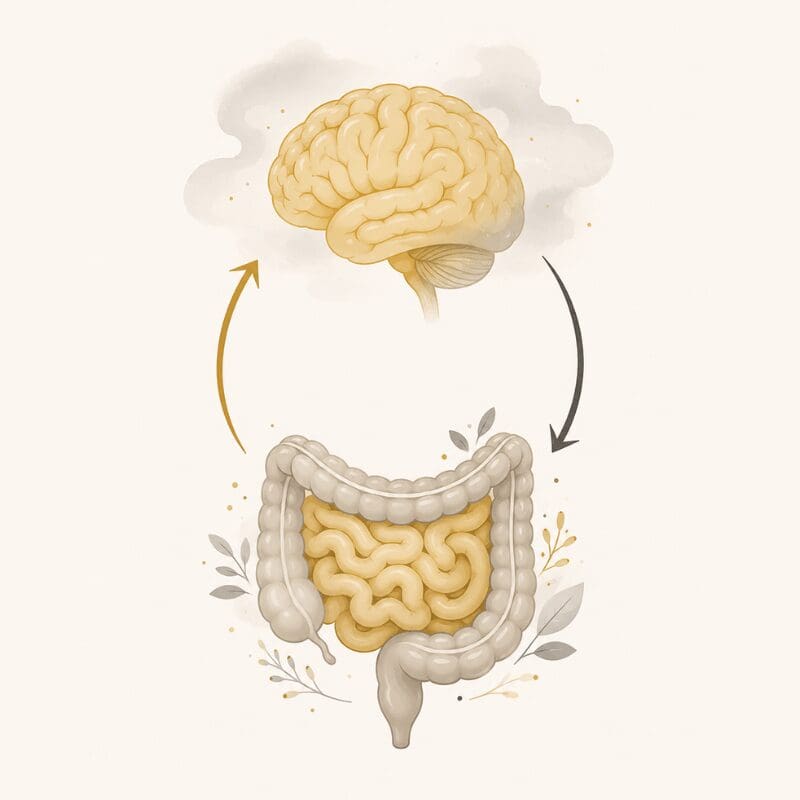
At Grey Matters, we recognize that regulation is influenced by more than the brain alone.
It all influences how a person feels, thinks, sleeps, and functions.
For appropriate patients, Grey Matters offers GI-MAP testing to provide additional information about gastrointestinal health.
This information is never viewed in isolation.
Instead, it becomes one piece of a larger clinical picture that may help guide conversations about overall wellness.
Whenever possible, we encourage patients to continue working with their functional medicine provider, primary care physician, and other members of their healthcare team.
Why Occupational Therapists Partner with Grey Matters
Six things Occupational Therapists tell us they appreciate that we:
1
Respect the therapeutic relationship you’ve built.
2
Encourage clients to continue occupational therapy.
3
Focus on individualized care rather than one-size-fits-all recommendations.
4
Take time to educate families before recommending services.
5
Welcome collaboration when clients provide written authorization.
6
View ourselves as another member of the client’s care team.
Together, we help families better understand the many factors that may influence participation, regulation, and overall well-being.
The Client journey
Five steps, and none of them are paperwork.
Simple. Collaborative. Client-centered.
Step 1
The client schedules a Brain Map.
Step 2
We complete a 45-minute Brain Mapping assessment.
Step 3
Courtney Reimmuth, RN, conducts a comprehensive Brain Map Review.
Step 4
The client decides whether neurofeedback or other supportive services are appropriate.
Step 5
With written authorization, we collaborate with you as part of the client’s care team.
Meet Grey
Grey Matters began with one little boy named Grey.
At four years old, Grey was diagnosed with Childhood Apraxia of Speech, and his family was told he might never speak, read, or write independently.
As a registered nurse and mother, Courtney Reimmuth refused to stop searching for answers.
Grey’s journey eventually included neurofeedback, and over time he made remarkable progress. Today, he is a thriving teenager whose story inspired the creation of Grey Matters.
That journey taught us that meaningful progress often happens when caring professionals work together.

Frequently asked
Questions We Often Hear From Occupational Therapists
We work with children, adolescents, and adults. Every recommendation is individualized based on the client’s goals and needs.
Grey Matters does not bill insurance directly.
Yes.
With written client authorization, we are happy to collaborate with referring providers to support coordinated care.
No.
Occupational therapy and neurofeedback serve different purposes and can complement one another. Our goal is to support—not replace—the important work you do.
No. Grey Matters does not diagnose medical or developmental conditions. We encourage every client to continue working with their occupational therapist and healthcare providers.
Thank You for Helping People Participate Fully in Life.
Occupational therapists help people do the things that give life meaning.
Whether you’re helping a child succeed in school, supporting independence at home, or helping someone regain confidence after a setback, your work changes lives in ways that often go unseen.
We deeply respect the dedication, creativity, and compassion you bring to every client. If Grey Matters can become another resource for the families you serve—or if you’d simply like to learn more about what we do—we’d love to welcome you to our studio.